Phone Cases
We Dropped Callbuddy 26 Times. Here's What Happened.
 Jeroen De SmetCo-founder, Callbuddy · Sep 30, 2026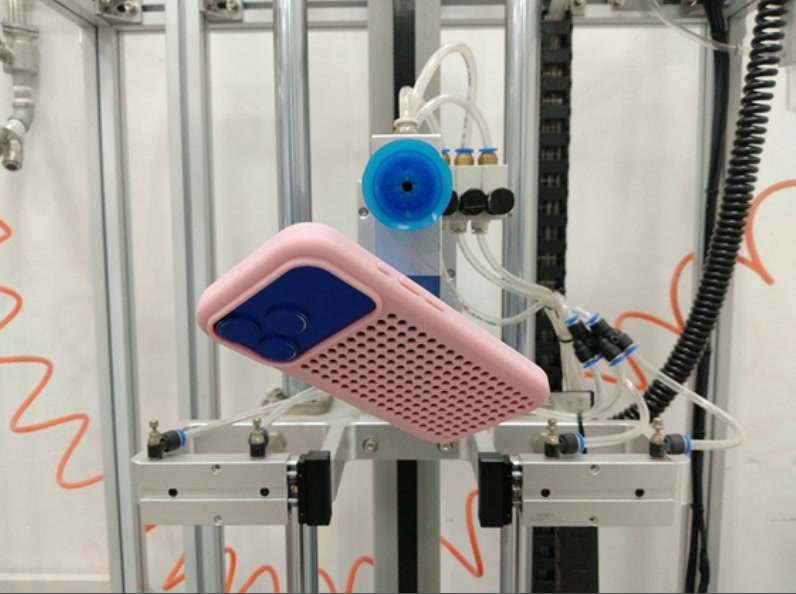
Callbuddy in the SGS drop tester, ready for a corner drop.
Summary
A Callbuddy phone case was independently drop tested by SGS according to MIL-STD-810H, Method 516.8, Procedure IV. It was dropped 26 times from 1.22 m (4 ft) onto plywood, on every face, edge and corner, with a phone inside. After the test there were no visible cracks or damage on the case or the phone. The case passed.
Why we had Callbuddy tested independently
Almost every phone case claims to protect your phone. Few can prove it. Words like "rugged", "shockproof" or "military grade" are easy to print on a box, and hard for customers to check.
We wanted proof that doesn't depend on our own word. So we sent Callbuddy to SGS, one of the world's largest independent testing, inspection and certification companies, and asked them to run a standardised drop test. Same method, same machine, same rules as any other product would get.
What is MIL-STD-810H?
MIL-STD-810H is a test standard published by the US Department of Defense. It describes how to test whether equipment can survive the conditions it will face in real use: heat, cold, humidity, vibration, and shocks such as drops.
The drop test is part of Method 516.8 (Shock). Procedure IV of that method is the "transit drop": it simulates what happens when a product falls while it is being carried or handled. For items that are carried by hand, the standard sets the drop height at 122 cm (4 ft), and the product has to land on every face, every edge and every corner: 26 drops in total.
Good to know: there is no official "MIL-STD-810H certificate". The standard is a test method, not a certification scheme. That's why it matters who performs the test and whether the results are documented. In our case: an independent lab, with a written test report.
How the test works
The test was carried out at the SGS laboratory in Guangzhou between 21 and 30 September 2026. A dummy phone was installed in a Callbuddy case, and the case was mounted in a calibrated drop tester. The machine holds the case in a precise orientation and releases it from exactly 1.22 m onto a plywood surface.
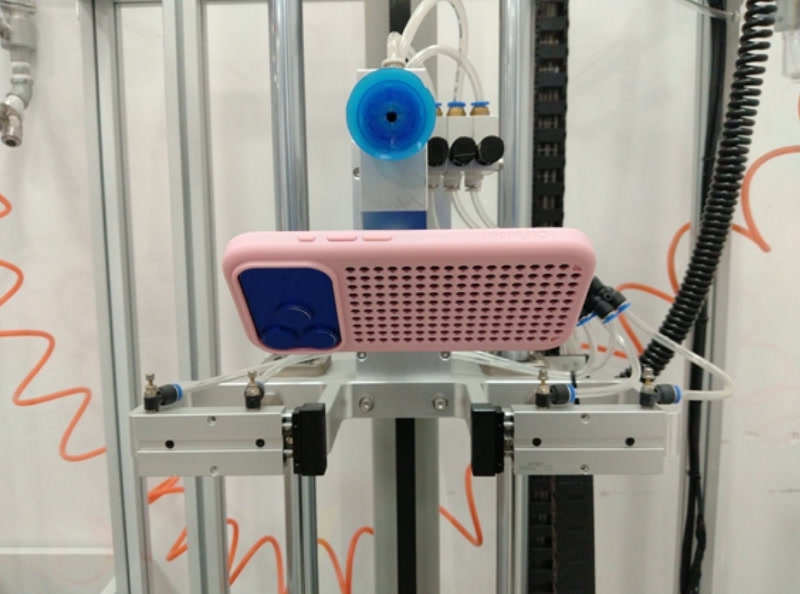
The case was dropped once on each of these:
- 6 faces: front, back, top, bottom, left and right side
- 12 edges: every line where two faces meet
- 8 corners: the most vulnerable points of any phone
That adds up to 26 drops. Corner drops are usually the toughest: all the energy of the fall is concentrated on one small point, which is exactly where screens tend to crack.
Key facts
| Key fact | Detail |
|---|---|
| Test lab | SGS (independent) |
| Standard | MIL-STD-810H w/Change 1-2022 |
| Method | 516.8, Procedure IV (transit drop) |
| Number of drops | 26 (6 faces, 12 edges, 8 corners) |
| Drop height | 122 cm (4 ft) |
| Surface | Plywood |
| Phone inside | Yes, dummy phone |
| Result | No visible cracks or damage on case or phone |
| Conclusion | Pass |
| Report | GZMR260903545401, 30 September 2026 |
The result: zero damage
After all 26 drops, the SGS engineers inspected both the case and the phone inside it. Their conclusion: no visible cracks or damage on the phone case, and no visible cracks or damage on the phone. Callbuddy passed the test.
The before and after inspection was documented with photos against a measuring ruler and a colour reference chart, so any damage or deformation would have been visible. There was none.
For us, that's the difference between saying a case protects your phone and showing it.
What this test does and doesn't tell you
We believe honest claims build more trust than big ones. So here's what the test means, and what it doesn't:
- It shows that Callbuddy withstood 26 controlled drops from 1.22 m on every face, edge and corner, without damage to the case or the phone inside.
- It was performed by an independent lab using a recognised, standardised test method.
- It does not mean the case makes your phone indestructible. Real-life drops vary in height, angle and surface. Concrete, for example, is harder than plywood.
- The test was performed on one sample.
In short: a strong, independently verified result, not a promise that nothing can ever happen.
Frequently asked questions
Is Callbuddy MIL-STD-810H certified?
There is no official certification for MIL-STD-810H; it is a test standard, not a certification scheme. Callbuddy was independently tested by SGS according to MIL-STD-810H, Method 516.8, Procedure IV, and passed.
How high was Callbuddy dropped?
From 122 cm (4 ft), the drop height the standard sets for products that are carried by hand. That's roughly the height at which a phone slips out of your hand or pocket while you're standing.
How many times was Callbuddy dropped?
26 times: once on each of its 6 faces, 12 edges and 8 corners.
Was there a phone inside the case during the test?
Yes. A dummy phone was installed in the case during all 26 drops. After the test, neither the case nor the phone showed visible cracks or damage.
Who performed the drop test?
SGS, an independent testing, inspection and certification company. The test was performed at the SGS laboratory in Guangzhou between 21 and 30 September 2026 and documented in test report GZMR260903545401.
Protection that's been put to the test.
Dropped 26 times. Zero damage. Give your phone the case that proved it.
Shop CallbuddySee the drop test on our case page →Written by
Jeroen De SmetCo-founder, Callbuddy